
Lindley Hoffman Miller Letters
Lindley Hoffman Miller: A Brief Biography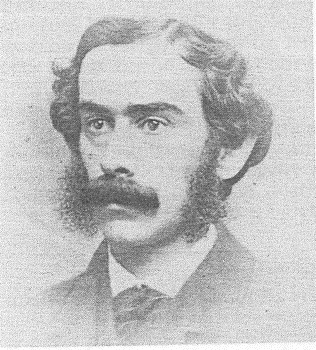
Lindley Miller was born in Morristown in 1834, the son of Jacob W. Miller who served as a U.S. Senator of the Whig Party from New Jersey between 1841 and 1853. His mother was the former Mary Louisa Macculloch, daughter of George P. Macculloch, who designed and built the Morris Canal.
Miller graduated from Burlington College in Burlington, N.J. in 1854, an institution co-founded by his grandfather. He failed in an effort to get an appointment as a cadet in the U.S. Military Academy at West Point, despite the influence of his father. In 1855 he was admitted to the bar. Even as a young man, he was a noted orator and poet.
He was residing and practicing law in New York City at the outbreak of the Civil War in April 1861. He was among the first to volunteer for service, joining the New York Seventh Regiment Company F as a private. Also serving as a private in the same Company was Robert Gould Shaw who later commanded the 54th Massachusetts Volunteer Infantry Regiment of African Americans made famous by the 1989 movie Glory.
After serving a year in the Washington, D.C. area, Miller in May 1862 married Anne Huntington Tracy, known as "one of the beautiful Tracy girls." The couple was living in New York City, and he was stationed at the regimental armory. In the summer of 1863, Anne Tracy Miller was pregnant and close to delivering their child. When the Draft Riots broke out in July in New York City, her father took her out of the city to the Catskills, as Lindley Miller was serving with his guard unit at the armory. In August, Anne Miller died after childbirth, at age 24, and their infant child died a week later. To assuage his sorrow, Lindley Miller decided to seek a military commission, and agreed to serve as an officer with a “colored” regiment receiving a commission as Captain in the First Arkansas Volunteer Infantry Regiment (African Descent) in November 1863.
While serving with the First Arkansas he wrote the "Marching Song of the First Arkansas Colored Regiment" known today through the song sheet issued by the Supervisory Committee for Recruiting Colored Regiments in Philadelphia. The "Song of the First of Arkansas," written in dialect, was one of several broadsides issued by the Committee for recruitment purposes.
The First Arkansas Volunteer Infantry Regiment saw action in a skirmish at Mound Plantation on June 24, 1863, and action on June 29 at Goodrich’s Landing, where the unit remained for post duty through January 1864. The unit then took up duty at Haines Bluff, District of Vicksburg, until May 1864.
Lindley was so well appreciated by his superior officers that he was soon promoted to the rank of Major in a new colored regiment in Missouri. Miller never took up his new commission as Major with the Missouri regiment. On leave to his home due to illness, he died on June 30, 1864, at age 30, from a fever he had acquired during his military service with the First Arkansas.
_________________________________________________________________________________________________________________________________
To see the scan and transcription of the letter, click on the green box to open the transcription, then click on the link at the top to open the letter scan in a new window.
_________________________________________________________________________________________________________________________________
Transcriptions were completed by Rose Feiwal during her fall 2020 Archives Internship.
George Perot Macculloch (GPM) to Lindley Hoffman Miller (LHM) (A2045)
December 13, 1850
Written to his grandson Lindley, a student at Burlington College. George asks the question of whether a state has any right to secede from the Union as a suggestion for a speech being prepared by Lindley. George feels that the Union may be dissolved if found inexpedient, but in practice "long may it continue".
Morristown 13 December 1850[1]
Dearest Lin,
Has a State any right to secede from the Union?
Look around – standing surrounded by the unstable works of the Creator, can you name a single object often which his hand has not emprinted [sic] the words “Sic transit.” The glory of animal and vegetable nature, all which lives, […] soon away and even inorganic matter obeys the doom of transition and death. The mountain, worn down by storm, frost and thaw, in slow, silent unceasing […], sink towards their valleys; while valley, upheaved by volcanic action, rear themselves unto new Alps and Andes. Sweden is sinking into the Baltic at the rate of 7 feet a century, while Patagonia has risen 10 feet within the same period; nay the great Globe itself, originally a sphere, has become oblate by her centrifugal motion. Vain Man! If the Duty has decreed that all visible works shall perish, does thy folly aspire to construct that which shall defy nature’s Universal law? Law that which in Mortal produce an immortal offspring, if no State have a right to secede from the Union, that Union must be (de jure) immortal.
With all reverence for the Constitution, love for the Union, I must say that they are objects of […] and idolatry. We worship them as the Egyptians worshipped the Cow or an Onion.
What is a Constitution? It is the fundamental law establishing a government, and is good or bad as it conforms to the habits and promotes the happiness of a people. But the habits of a people change every year. That which suits an agricultural world not suit a military or commercial nation; the liberty of an American turns the brain of a French Man and would be incomprehensible to a […]. Constitutions that ought to follow and change with the ideas of the people; when they do not, dispersion, rebellion and revolution are the consequences. What guarantee have we that American habits, manners, customs, morals will not gradually degenerate into the mercurial temperament and accommodating […] a city of Gaul. We sent youth there to educate and manhood to be formed. The House [packets?] bring […] Congress. [Laced?] religion, satins, and debauchery. Fashions and upstart aristocracy. Under whose combined nation the Old Spirit of 1776 gradually sinks. Yet a few years the population of our cities will become as wretched, as abandoned, as turbulent as that of Paris or London, the infection will […] from lawn to country, the form of our Government may remain Republican, but its temper will be Monarchic excepting in the Agricultural States of the far West. Our Union will then become a map of discordant materials, bound together by no common sentiment, the living chained to the dead by a bond of mere parchment. Ought such an incompatible [association?] to the perpetuated; can it be perpetuated but by Greater violence and military tyranny? The [poor?] have a right to secede from the empire, the […] from the Plague [in Krakow?]. The Union is a bond so long as it is voluntary, is sanctity consists in its […], as soon as it ceases to be unsafe it ceases to be binding; becomes a mere rope of sand as soon as its advocates cannot point to the blessings which it confers.
In theory then our Union may be dissolved as soon as it is found inexpedient; in practice, long may it continue; long may it continue a chain of patriotism, […] and love, to which each succeeding year shall add a fresh Link.
Here is some foundation for a speech, it is all that strikes me at this moment – Spin it out.
I am sorry when to hear your watch does not perform laudably. It was purchased under a guarantee of good behavior for 12 months, during which time it may be returned and exchanged. Let nobody touch it and when you come through New York, you can go to the Horologist and make your complaint – It cost $6 more than George’s.[2]
For news I refer to your other correspondent. I have been unwell for a month, begin to feel the presence of years, and receive an admonitory hint that bedtime is at hand – Amen.
Your ever affectionate Grandfather,
George Macculloch
[1] 1850 was an important year in American history and politics as The Compromise of 1850 was passed by Congress in an attempt to assuage tensions between free states and slave states. r
[2] Lindley’s older brother
Mary Louisa Miller (MLM) to Lindley Hoffman Miller (LHM) (A2004)
c.1851
His mother, Mary Louisa, strongly objects to Lindley's desire to enter West Point after finishing Burlington College. His father, Senator Jacob Miller, can procure a cadetship at West Point for Lindley, but she feels that Lindley does not have the temperament to be a soldier. He finds it difficult to obey orders. He should be a writer or a civil engineer if he needs adventure.
Tuesday afternoon
A letter received from your Father this morning in informing me that he had it in his power […] for you a […] at West Point has given me a great deal of anxiety for I greatly fear my dear Lin that your imagination will be so dogged by the prospect of a military life that your sober judgement will have no chance of being heard. Oh! that I had the persuasive eloquence to convince you how unwise it would be, know that your education is so nearly completed to choose a profession, which, to all thinking person has nothing to offer but a life of hardship and […] [when?] [aided/undid?] me by fame and honor.
If you could have entered West Point before you went to college, and […] there, […], a good education with the [beauty/plenty?] of choosing a profession after you had graduated, I would have made no opposition, but now that you have nearly completed your collegiate course and are longing for home and freedom why should you subject yourself to four years additional subjection for a discipline far more strict than any you have yet undergone […] to the army for a profession, there is not a military man in the union that would not dissuade you from it. It has nothing to offer except its life of adventure and after all what great romance is there in being garrisoned in the far west with no adversaries but a few Indians afraid of all the comforts of religion, society, and home. If you must have a roving life why not prepare yourself to be a civil […] and there is a field wide enough in our new territories to satisfy all your longing, and perhaps fill your pockets into the bargain. Besides my dear Lin, you must not be angry if I say that from past experience I am far from feeling confident that you would […] thro[ugh] West Point with the honor you anticipate if you conduct and study […] will not stand the test of Burlington[1] be [afraid?] that they would not that of West Point when not the [shy?] […] upbringement [sic] of […] unnoticed. If you complain of the rounds for five months how will you submit to still more rigid enforcement without […] for 2 years. However if I could be convinced that a military life was best suited to your character I would not say a word about the preparatory ordeal trying as it might be but indeed my dear boy I know you far better than you do yourself and I am perfectly satisfied that by habits, principles, tastes and talents you are fitted for something better than the trade of war – you are social, literary, and have, not a little, ambition to distinguish yourself, how will any one of these tastes be gratified in a frontier garrison – you may, and will, I have no doubt […] yourself as a writer or as a public speaker, and may hope by your talents to do some good to your fellow creatures, but as a soldier, what will these talents avail either yourself or others – you have not my dear for the military virtues of regularity, precision, and ready obedience to orders, and your discontent at Burlington must be a proof to yourself of your aversion to submit your will to that of those who are set over you. I beseech you my dear Lin to pause, and consider seriously before you decide upon so momentous, first Pray earnestly for divine guidance upon a subject which affects your happiness here and it may be hereafter.
I will say no more my dear Lin except that in my advice to you I have not for one moment consulted my own personal feelings but have solely considered what I am perfectly certain is for your own good. Your letter to Frank[2] was received today and was most welcome – I am sorry that you seem to consider yourself neglected by the letter writers of the family. I believe you seldom go a week without receiving one and really where there are so many members of the family absent it is difficult to send more to the individual. As for myself I dare not write at […] and you know how difficult it is for me to accomplish much writing during the day. I am almost ashamed to send this blotty […] but George[3] has got some miserable ink, […]. I regret very much to hear that Bartow is ill. Poor fellow, how he must long for his kind Mother. I hope you try all you can to […] the poor boy. Give my best love to him. I took tea with his Grandmother last night. She is quite well. Louisa will probably not be home till Spring. Jack[4] sends his best love to dear Brother Lin. Goodbye dear Lin, think seriously of what I have said to you and make up your mind to follow the advice of your […], but not fools.
Mother
[1] Lindley went to Burlington College. The college was co-founded by Lindley’s grandfather, George Macculloch
[2] Francis (Frank) Miller was Lindley’s brother and died at the age of fifteen in 1854
[3] Lindley’s brother
[4] Lindley’s brother; his nickname of “Jack” comes from his given name Jacob
Jacob Welch Miller (JWM) to LHM (A2033)
May 1, 1852
Lindley's father, Senator Jacob Welch Miller, sending $15.00 for pants. Lindley shouldn't neglect "the legs" at the last of his "collegiate run". Lindley was visiting his brother, Henry, at Annapolis.
[…]
May. 1 1852
My Dear Lin,
I received […] but I must beg you to remember that two Vs, make a W that is ten dollars in […], but as I have no reason to believe that you lost money I most fully comply with your wishes.
I take it for granted that this [new?] […] and you therefore have my munificence to get […] at [that?] a raccoon the [direction?] of Mr. Brooks. He is […] not your […] commencement and as your collegiate race is nearly run, it will not do to neglect these legs in the last heat.
I hope to be there to [you?] and have no account not that you will do honor to both head and legs.
I […] yesterday with dear Harry at Annapolis. He is quite well although he has received his first […] in nautical affairs and [fast punching?] off of the [wharf?] [increasing?] the depths of the water. […] teach him hereafter to cook when he cooks. […] are all […] about the fish […] and […] Harry […], to have a […] at John […] but they were and I take it for granted that the two great […] are [not?] to […] as to go to war. For fish […] that too a […] fish.
We expect to adjourn by the first of September. […] [Scott and Graham?] in the Jerseys. I have sent you service paper and I half expect a Scott […] in the use of the […].
Give my best to […] and may God bless you! Keep your affectionate
Father
GPM to LHM (A2047)
June 14, 1852
Mortified at "miscarriage of our West Point aspirations", but isn't it better to be a civilized lawyer than a soldier serving on a wild frontier? To be a lawyer, Lindley must quell his "natural tendency to fun". "Professions of the sword for our family...from Country Doctors and Silky Parsons, good Lord deliver us!"
Morristown 14 June 1852
Dearest Lin,
Lest it should be forgot in the ardor of composition, let me begin by telling you that certain pair of Pants will be sent to you thro[ugh] the medium of Helen who talks of breaking away for Burlington in probably 10 days – It is a philosophical enquiry of no mean importance to trace why Pantaloon, which is the singular number signifies a blundering stupid dotard, which in the plural denote a nether garment – And again, not satisfied with [so?] mere plural, […] double the dual, by saying a pair of Pantaloon, thus the mystic and symbolic meaning seems to be that it requires four blundering stupid dotards to furnish the equivalent of a pair of Pantaloons.
Shakespeare talks of “an old and [slippered?] Pantaloon.”[1] Then you have authority and […] for an [epay?], reflecting honor on your college and [prefiguary?] fame to yourself – How lucky that this train of thought should have occurred so very apropos, at the very moment when I prepared to say that after […] my brains for 48 hours, I have been unable to beat out any subject fir for your commencement today. Every idea which occurred was either too abstract or too absurd; nothing would present itself of the […] character which befits a Maiden Oration. Most regretfully I feel myself constrained to admonish you to delve into your own […] for some subject, which, when found, I shall with pleasure aid you in fashioning and polishing into brilliancy […].
I was quite as much smitten by the Military Mania as yourself; you were probably not more mortified than me at the miscarriage of our West Point aspirations. But let us think soberly upon the question “Whether is it better to waste your life in the winds of Oregon and the deserts of Central America, with gentle intercourse of Backwoods Men and Mormons; in the occupation of hunting down Savages,[2] with a log fort for habitation and for company only a company of illiterate, gambling, drinking, brawling Soldiery, – or – to […] your youth in refined and educated Society, surrounded by Science, Philosophy, and Belle Lettres – your Manhood, surrounded by Clients, in Forensic effort, and your maturer [sic] years, devoted like your Father, by the confidence and respect from fellow citizens.” I congratulate you on your preposition for Law; you are of the right material to rise at the Bar – One thing only must be done – “your mind is more Rhetorical than Logical; it is equal to a mighty effort, a strong jerk?; but is it also equal to protracted, serious, any monotonous study? – You must acquire the faculty of Mental patience and ordinance, the habit of investigation; you must be not only an advocate and orator, but a Lawyer, […] and profound, without which the counselor is nothing but a Quack,[3] and the Pleader a mere vox [… nil].
To counteract your natural tendency to Fun, to counter[praise?] your vast abundance of [Soul?], there must be laid up a proportionate weight of ballast. If your left hand pockets are full of Poetry and Romance, slow will your right side with Calculus, Tonics, Chemistry, Ethics […]. [Immerse?] yourself to Chains of prolonged enquiry, investigation, meditation – Life may, in some sunny […], be Poetry; but the long intervening spaces are dull, flat, stupid Prose: occasionally a joke, but mostly a slate, sodden, dull truism.
Harry[4] has got into the very Position for which Nature destined him, and if he can only cram a sufficiency of Mathematics, will make a gentlemanlike correct and gallant officer, a credit to his Country […] honor to his name.
Profession or the Sword for our family. From Country Doctors, and from Silky Parsons, good Lord, deliver us! The Bar or The Battle is our fate. I have written myself thin and the dinner bell tinkles its musical summons, so God bless you, my dear Boy.
Your affectionate Grandfather,
George Macculloch
[1] A line from Shakespeare’s “Taming of the Shrew”
[2] Native Americans
[3] A person that typically works in some sort of medical field who knowingly pushes false and “special” information/treatments
[4] Lindley’s brother; his nickname of “Harry” comes from his given name Henry
JWM to LHM (A2034)
June 27, 1852
His father sending $5.00. He has been too busy nominating General Scott to write. Hopes to visit Lindley at Burlington on way home from Salem with Mary Louisa.
Sunday
June 27/[18]52
I was so […] the last […] with the [expectation?] [something?] […] as to forget my dear boy Lin and I found myself in that place last week without you. Mother has explained it […] as I hope you with [love?] at Lizzie’s[1] […] with […]. The dear letters Mary Mac[culloch],[2] […] she a darling.
I do not […] know when I shall see you yet. I fear not […].
I think of returning [home?] on the 4th and will if possible call at Burlington[3] on my return.
Harry[4] is doing well and is quite happy in his new life. He and Mother I suppose have told you all about him.
I enclose you a V, which I suppose you need when going to Salem[5] but I forget your hint for funds.
If anything has […] your visit to Salem. I have written to Mother to tell you to meet her at […] on her way home. She will write you after the subject.
Yours affectionately.
Father
[…]! For Scott and Graham. Can’t you make sure about this […].
[1] Lindley’s sister-in-law, Elizabeth Ogden Hoffman, who was married to Lindley’s brother, George
[2] Lindley’s cousin on his mother’s side who died at the young age of 20
[3] Lindley went to Burlington College
[4] Lindley’s younger brother; his nickname of “Harry” comes from his given name “Henry”
[5] The Millers used to live in Salem, NJ before moving to Morristown, NJ
LHM to MLM (A2011)
January 9, 1857
Writing to his mother, Lindley is delighted at George's engagement to Lizzie Hoffman.
Camden
Jan. 9, 1857
Dear Mother,
Just you get […] “Old Mortality”[1] out of Anthony’s[2] library “overhaul the leaves thereof,” and you will find a letter written by the Heroine (I forget her name) to her Uncle, in which she gives him ever so many directions and makes lovely requests about matters of apparel […], not shirts, and at the end in a postscript tells him of the infinite danger in which her Lover Morton is – and when found […] down a leaf. Because your letter received this morning in a Bundle of shirts is just like hers only more so. You don’t mention the matter nearest your heart even in the postscript. You didn’t mention it the other day when I was with you four [maybe sic?] hours and you knew I shouldn’t see you again in a long while. You let me write an absurd and ridiculous letter to Lizzie,[3] when I should have written one utterly different full of the greatest pleasure I have felt for many a month. What a funny darling Mother it is to beat her Boy so! But she never did anything without a good motive and therefore I am only a little Mad. But I should have liked to talk to you about this new arrangement to congratulate you. And there, if I had known it, I should certainly have gone to see George[4] and Lizzie and Aunt Susan and have had a kiss from all hands or all mouths. I received from George this morning a splendid letter, made right from his heart. It went straight to mine and is there still. The idea of George and Lizzie being engaged is perfect. None better could possibly be imagined. My only objection is that is overthrows my theory of the Hoffman[5] and Miller family but not being so tenacious of theories as […] old Father’s was. I will endure this quiet for the sake [of] the overwhelming delight on the other side. Another Lizzie, darling, for you to hold to your heart as a dear daughter, not to fill the place of our Blessed one who has gone before,[6] but to take up the silver chords of human love which then were broken and […] them anew until they echo through that vacant place and make it vocal with sweet melody. I know you are delighted with this consummation of many years of friendship and regard; and I only […] you might have told me so. Please write to me as soon as you receive this and make reparation for my losses. I was at Trenton yesterday and did not see Anthony. This is written in great haste before a Party which I shall be at […] in consequence. Goodnight darling! The shirts don’t deserve notice in this and shan’t have it. A thousand thanks for them though. They are quite as necessary to be sure as some other things. Eddie[7] deserves blame in the matters also. Let her consider herself scolded. Kiss the Children from Jack to [May/Mag?].
Yours forever,
Lin.
[1] A novel written by Sir Walter Scott
[2] Lindley’s brother-in-law who was married to both Edwina and Elizabeth
[3] Lindley’s future sister-in-law, Elizabeth, who has just gotten engaged to Lindley’s brother
[4] Lindley’s older brother
[5] The Hoffman family was very close to the Miller/Macculloch families, hence Lindley’s middle name of “Hoffman”
[6] Lindley had a sister name Elizabeth who died in 1852 at the age of 24
[7] Lindley’s older sister; her nickname of “Eddie” comes from her given name Edwina
LHM to Jack Miller (A2029)
December 1, 1858
Writing to his brother, Jack, with brotherly advice and wishing to be home for Christmas with the family.
Camden
Dec. 1, 1858
Dear Jack,
I suppose you know this is the first day of Winter. Now look out for snow and ice, sleigh riding and skating, wet feet, […], cold fingers and a red nose. Hurrah! For sliding down hill, and making snowman, and getting […] aside of the cocoanut with big snowballs on somewhere else, perhaps where that Frenchman got hit when he was knocked “to the other side of Jordan.”[1] “I looked to the East – I looked to the West”[2] don’t you remember? I was very glad indeed to get your letter. I have been expecting it now for a long time and I had a great mind to […] it for not coming sooner but it was such a good looking one that I didn’t. Christmas will soon be here now won’t it? What are you going to give me you young rascal you? If you don’t give me something, I’ll send you further than to [the] other side of Jordan I tell you. People don’t hang up their stockings here but the boys hang up their pantaloons tied at the bottoms so the doughnuts won’t slip out and the girls hang up their hoops and get them fuller than they ever are at other times I tell you. I know a young lady who got six barrels of sweet potatoes here in that may last Winter and expects twelve this year. Tell Mother that I have received the shirts in good order and am much obliged to her for them. Tell her that one or two others have small holes in them, but I would rather they would than not, because I can’t bear to live in a close atmosphere, and I think a draft is very good for the Body. Besides I always remember […] verses when my shirts are falling to pieces. “It’s not your Linen you’re wearing out” and I try to believe that it is true, and that the linen isn’t wearing out.
But I forgot you never read Hood. You’ve read “Little Red Riding Hood,”[3] but that’s another one. This is something like that, only funnier, enough […]. Wouldn’t you like to be back in Morristown again? I wish I were there with you and Geordie, Eddie,[4] and […] to have a group in the old hall. How we’d make the dust fly wouldn’t we? Never mind we’ll get there some of the days again I guess and then we’ll have a pick-up as is a pick-up. How are you getting on with your lessons? I hope you are studying hard and so doing dear Mother’s heart good. Remember my Boy how much she loves you and does for you and try all the time to give her as little trouble as you can. When you grow older you will be glad that she has made you study and do what didn’t seem pleasant at the time and now and then scolded you. Only try your best and to be quiet when you are saying your lessons and keep thinking of what you are about and don’t ask too many questions and you will soon learn. Give my love to Sister Eddie and Eddie, Geordie, […], [Franny?],[5] and Mary.[6] And kiss each one of them all over from head to foot for me. Perhaps I will see you on Christmas but maybe not. I cannot write anymore now old fellow.
Goodbye.
Your funny old Brother,
Lin.
[1] A line from Numbers 32:1-42 in the Hebrew Bible
[2] A line from Job 23:8 in the New Testament
[3] A fairytale book written in the 17th century
[4] Lindley’s brother and sister; their nicknames of “Geordie” and “Eddie” comes from their given names George and Edwina
[5] Lindley’s sister; her nickname of “Franny” comes from her given name “Frances”
[6] Lindley’s cousin, Mary Macculloch
LHM to MLM (A2014)
October 5,1861
This early letter to his mother explains Lindley's desire to serve in the army. He expressed his commitment to the Union cause and gave his name to the "number of the Seventh". (7th New York Volunteers)
Oct. 5 1861
Dear Mother,
I don’t know whether you have gone or are going to Boston or not. I hope to, as this is our only opportunity […] you may have to see the army in a long while.
I have not heard from Washington about that staff appointment yet.[1] I fear I shall not be able to […] it. Whether I do not I want you and Father to understand why I deserve it. I will not speak of my […] for the position, […], that I am not in the […] of over […] myself, and wouldn’t undertake anything for which I did not know I […] myself in a short time. I am quite sure as to bodily health and […], that I shall grow stronger and heartier every day, as I did under […] for greater toil and […] cast-shiny. The out-of-door life and exercise of such a position for one year would give me [invaluable?] physical energy for my whole life.
But this is no question whatever of advantage or disadvantage to me. We have read history in vain, when we recognize the fact that in such times as these [really?] but a spirit of self-sacrifice will save the nation from ruin and degradation. It is very easy to communicate reasons in each individual case why such all [our?], or other, should not be called upon to encounter […] and danger. For my heart I cannot reason myself into any kind of contentment, while I remain at home in care and comfort and others are sacrificing everything. There is no enthusiasm or impulse in the matter. There never has been with me from the […]. I determined [that?] […], to put myself in some position to take part in this struggle and made arrangements […] to […]-effect. I felt […] there would be a sudden call to arms when a quick and high example would be needed. The lower the rank the greater the sacrifice and I required a number of the Seventh[2] to hand in my name, which he had been prepared to do as soon as he was […] for […] prior to that time. I tell you this now, because you have all seemed to think that that [sic] move of mine was suddenly made. Not […] to the whole thing was determined from long before. Now if I can procure a position which will give full play to all my faculties and give me an opportunity to do my part in this struggle with effect and […] I will take it and trust to God for a safe return to home and home duties afterward. If the cause of the nation do[es] [sic] not succeed, I would […]-give a shilling a century for life in this community. If it do[es] [sic] succeed my whole existence will be achieved and made happy with the idea that I all in my power in aid of such a result. As to my being able to go to work at the law again for my living, I should think the patient-[…] which I performed at Camden for two years as […] in a position you all commandeered […], in preference to asking Father for means of support, while I was […] a practice might convince you that [I?] have self-control enough to undergo any amount of […] consistent with honor rather than not make a living. Well I have […] my own […] periodically in this note. If I can’t to you, to whom can I? Dear Mother, if you don’t [sustain?] me in [malicious?] such as this, what shall I do for support? Perhaps all this is super […] because I may not get the […] Post. But if I can, I must take it.
Yours affectionately, Lindley H.Miller
[1] Lindley had decided to join the 7th New York Volunteers and was waiting to hear an answer back
[2] The 7th New York Volunteers
LHM to MLM (A2015)
June 3, 1862)
Lindley writing from encampment in Baltimore offering condolences for a child’s death.
Baltimore – Camp […]
June 3 – 1862
Dearest Mother,
It is almost dark, but I must write while I can […] my […]. Here it is so noisy. Your letter I received this afternoon. My own darling mother I weep and pray for you. I am so bewildered by all these […] strange events of the last few days. I cannot think that child was to me […]. Her gentle eyes looked into mine like the Spirit of her Mother. I though she loved me more than the others. She seemed to cling to me. Oh Mother how dark and dreary have been the last three days. Yesterday I was with you. I could not go in time, as I thought. I did not know when it was. I received Annie’s[1] letter on Sunday, while I was on guard which told me only the day and I couldn’t tell whether I would possibly get home in time and then I would rather remember my darling as she lay in my arms the last time I saw her. Sweet mother if I could only put my arm about you now.
You [have?] upon God so [surely?] always. Dear Father how hard this is for him.
Could not he come here while we are encamped, with Jack[2] or yourself. I am sure it would do him good. I hope we shall go home very soon. I shall ask a furlough when we do. All charges from the Enemy is over. If there ever were any; and I cannot remain here for mere […]. It is too dark to write any more. Let Jack write often. Goodnight.
Your affectionate Child,
Lindley Miller
[1] Lindley’s wife: Anne Huntington Tracy
[2] Lindley’s younger brother; his nickname of “Jack” is from his given name Jacob
LHM to MLM (A2016)
August 2,1862
Written to his mother from Baltimore with verses for his wife Annie. She should show them to Eddie (sister) or Harry (brother). Brother Jack's letters are improving. In the summer of 1862, Lindley was camped with the Seventh Regiment New York National Guard near Baltimore.
Baltimore Aug. 2 1862
Dearest Mother,
I thought I should have no more time to write this morning, but I find there is to be no battalion drill, on account of the heat, and therefore I can say a few words. Here are some verses I wrote for Annie[1] some time ago. I send them to you because you alone write her. Know my heart and the motives in it. You may show them to Eddie if you like – no one else! [When it be?] Fanny.[2] “Ain’t ‘eur pretty?” as Daisy Tracy[3] says. I wrote to Lefferts’[4] this morning, likewise to several others. I am to[o] [sic] glad he enjoyed the visit to Newport. I hope he will go on another trip before long to the Catskills for instance. I know that air will do him good. Lefferts’ letter gives you all the news I have for you. I have heard nothing of Harry since he left here. I very much hope he will be married before he goes away. They will both be to[o] [sic] much happier. Jack[5] writes capital letters. I will try to write to him on Monday; but he should write for his own improvement as well as my pleasure. There is no kind of composition so improving. Please tell Mr. Mackenzie[6] about [Renauld?] – See Father’s letter! We had a good old time down there – anything for a change! We use postage and stamps mostly. Our regiment is in good order for a fight now. But there is none in prospect. We shall return home having done our duty, which is nothing you know in the opinion of those who never shoulder a musket, when we return with one half our men, leaving the others in the pleasant land of […]. Never mind – duty is duty! And glory is Glory! They may go together and they may not. The first is sufficient for me. I know it is for you, you dear Bible-woman!
(A/N: This page of the letter is cut in half about halfway down and it is missing.)
Goodbye […] my Beauty […] next week, […] [Mais bella?]
Yours affectionately,
Lindley H. Miller
P.S. I cannot write […] that is wrong […].
[1] Lindley’s wife: Anne Huntington Tracy
[2] Lindley’s sisters’ nicknames are derived from Edwina and Frances
[3] Lindley’s in-law
[4] Family friend
[5] Lindley’s brother; his nickname of “Jack” comes from his given Jacob
[6] Family friend
LHM to MLM (A2017)
August 31,1862
On August 29, the Seventh Regiment returned to New York City to a hearty welcome as it marched up Broadway. Lindley was eager to get home to his bride, Annie Tracy whom he married days before being “mustered in” for duty.
New York Aug. 31 1862
Dearest Mother,
Here I am you see, once more in a […] place. Oh! How glad I am to get home. These three months have been a […] inexpressible to me. George and Harry[1] both went to Newport Saturday afternoon. I caught a glimpse of Harry as we wandered up Broadway, but could not shake hands with him. We arrived here at twelve o’clock yesterday, after a very pleasant journey home over the [River?] and […] Roads via […]. It was cool and dustless all the way. Someday next week I will go to Morristown. Please write as to when! I mean to take a […] sometime next month thro[ugh] the Catskills. I think Annie[2] and I should have some fun for a […]. Dear Eddie’s[3] letter made the […] come into my […] eyes. Bless her heart for it! I shall go to-- I was interrupted in that sentence and have no idea what I was going to say.
The news from the […] is somewhat tellin[g] this morning. I trust we shall make the Rebels repent their […]. We never gave them a chance to make us do to. I find Annie pretty well. She needs play and a journey into the [Cat]Skills to give her vitality. Please write soon and tell me how Lefferts[4] is.
Yours affectionately,
Lindley H. Miller
[1] Lindley’s brothers, Harry is a nickname from his given name “Henry”
[2] Lindley’s wife: Anne Huntington Tracy
[3] Lindley’s sister, nicknamed “Eddie” from Edwina
[4] Family friend
LHM to MLM (A2018)
October 5, 1862
Writing to his mother about his father’s death commenting that “Father was purest patriot with his love of law and the Constitution”. Letter contains further recollections of him.
New York 84 East-Seventeenth St.
Oct 5 – 1862
Dearest Mother, I have longed all day to rewrite you. This Sunday has been very sad indeed to me, though the Sun has shone so brightly and the air has been so pleasant. Sometimes I seem to feel so heavy a gloom, that it will never be penetrated by any light, but […] it will be, even this upon our Country now, and this upon our dear home.
For the last year and a half my mind has been too much absorbed perhaps in the Nation’s honor. I fear I did not think as much as I should of household and family duties and pleasure. Father was the purest […] I ever knew, and one of the wisest. His […] love for the Law and […] I learned from him. They have been sent to my Bible always. Oh! it seems so terrible a […] if now they shall be […] upon and destroyed. Forgive me, dearest Mother, if sometimes, since they have been [attached]. I have seemed neglectful or [thoughtless?]. I thought of you at Communion this morning. All that service is comforting and reassuring to […]. You had Harry[1] write you and Fanny[2] and others, darling, whom you could not see.
I recall […] Sunday learnings long ago when we listened so closely to Father’s stories. I always thought it such a privilege and delight to hear them. We were with him more on Sunday than on other days. He loved the day so much for its rest and quiet worship. I think in your eagerness sometimes to do good, you working Christian women lose sight of this idea, although you love it more […].
But to men the escape from the turmoil and [position?] of the world is […]. Annie[3] is quite well and sends her love, which means a heart full of […] and affection. Goodnight, darling Mother! May God comfort you with all his merciful loving kindness!
Affectionately,
Lindley Miller
[1] Lindley’s younger brother; his nickname of “Harry” is from his given name Henry
[2] Lindley’s older sister; her nickname of “Franny” is from her given name Frances
[3] Lindley’s wife: Anne Huntington Tracy
LHM to MLM (A2013)
January 9,1863
Writes to his mother that he is working hard. He strongly believes that “we must fight to subdue the Southern rebels” and mentions that NYC has called for 20,000 volunteers for the army.
New York […] 74 Wall St.
Jan 9. 1863
Dear Mother,
I have not yet finished my letter to Harry,[1] but will do so tonight. To write as you asked requires a long story, and I want to send […] something satisfactory. I want him to be sure that we are […] and that his superiors in rank after the 4th [of] March are not only entitled to but deserve the […] of the army and navy in [reclaiming?] the government. I have not had a moment of spare time at the office since I heard from you, and have therefore been obliged to write in the Evening. I think we shall have to fight-it-out after all, when […] and […] should subdue the Southern rebels without […] and […]. Everyone here of all parties except Wood[2] and a few of his […] crew, are in […] of […] the government against traitors. By a call of volunteers, the City of New York alone would send twenty thousand men upon short notice. I […] [asked?] more than more men I think, but anarchy is much worse and I fear the alternative may be near.
Jan. 14
Jack’s[3] letter is first received. Tell him that neither George[4] nor myself have received. We are still subject to all [favor?] from headquarters, and will join […] home and […] whenever ordered. I think you had letters get […]. I rethink you had better get him […] Virgil.[5] The only one I ever had was really dilapidated when I went to college. Its remains must be humid in the house somewhere. George has none except a […] edition, which has a prose rendering in the margin which is not well. Be sure he examines to see that the […] books are there. An abridgement of Virgil is a classic reason almost as minimal as an abridgement of the Modern Republic.[6] I will go to Morristown as soon as I can. The hearing is not […] first now and I find […] necessary. […] is the Lion. When he has subdued all the vicious […]. We mean he shall […]I think he could manage her with the Capt[ain] of the 7th Regiment. I went to see the home [games?] with a […] the other Even[ing]. The audience consisted of […] and […]. The man is much of a […]. But so are most men, and women as well. I will set off any letters to Harry[7] tomorrow.
Yours forever
Lindley Miller
[1] Lindley’s brother; his nickname of “Harry” comes from his given name Henry
[2] William F. Wood was a Colonel of the Union Army and was in charge of the 46th United States Colored Infantry Regiment
[3] Lindley’s younger brother; his nickname of “Jack” comes from his given name Jacob
[4] Lindley’s older brother
[5] An ancient Roman poet
[6] Quite possibly a reference to Plato’s “Republic”
[7] Lindley’s younger brother; his nickname of “Harry” is from his given name Henry
LHM to MLM (A2020)
July 18,1863
Writing to his mother from New York City, Lindley graphically describes the measures he and his wife, Annie, took to protect their Negro servants during the New York City Draft Riots. He writes to his mother..."If could have remained with her [Annie], I should not have made her go [out of town]. But I cannot tell when I can leave the armory". Her father took Annie, close to term with her first pregnancy, away to the Catskills. Within weeks, both Annie and her newborn son would be dead, and the course of Lindley's life tragically altered.
Athenæum Club,[1]
108 Fifth Avenue
New York July 18 1863
Dearest Mother,
I received your letter this evening upon returning from the armory, we are off duty until 11 am tomorrow. Annie[2] went with her Father to Catskills this afternoon.[3] If I could have remained with her I should not have made her go, because she dreaded the idea of being away much more than she feared the mob.[4] But I cannot tell when I can leave the armory, and Mr. Tracy[5] wanted to go to Catskill. So, Annie was willing to go.
She is the bravest woman I ever saw – braver than ½ the men. If I had seen what she was in the […] I should of course deliver her to Morristown or somewhere immediately, but she was not, even while the fighting was going on all around. The only real danger to our home was the servants. Annie wouldn’t leave until she knew they were to the […]. I disguised them as far as it is possible to disguise a negro-bearded […] into the carriage with all the consideration imaginable. I went down Broadway in style with them. But I wouldn’t have taken Annie in that carriage for half the universe. Now dear, that Annie has gone, and the Africans are in a friendly county, you need have no fear for me. I shall spend more of the time in the armory and with the regiment. The rioters are thoroughly cowed, and there are five thousand people here now. I have not been in bed since Monday night. So, you will let me stop.
Annie was grateful for your letters and Fanny’s.[6] George[7] I believe has gone to Newport. I suppose he wrote to you this afternoon. It has been impossible for me to go to see him. This part of the City is quiet.
The doings of these Irish savages have been unparalleled in history. No mercy will be shown them, if any further disturbances occur. They will be smitten hip and thigh,[8] and destroyed “all the more.” I never imagined such a devil as I have seen in these brutes. The papers do not half describe the fiendish atrocities against the Negroes. But I will not describe any further details.
Goodnight! Sweet Mother! How I love to […] if you for […] in this turmoil and bloodshed.
Your affectionate Boy,
Lindley H. Miller
[1] According to Wikipedia, an Athenæum Club was/is “primarily a club for men and women with intellectual interests, and particularly those who have attained some distinction in science, engineering, literature, or the arts.”
[2] Lindley’s wife: Anne Huntington Tracy
[3] Annie would die less than a month after arriving in The Catskills
[4] Lindley and his wife were witnessing the NYC Draft Riots. The riots started when white working-class men, mostly Irish or of Irish descent, began protesting the Draft as they were angry that rich white men could pay a fee to hire a substitute rather than fight. The riots soon became aimed towards the black population of New York City who the working-class white men feared would be a competition for work. These riots led to the deaths of 119-120 people.
[5] Lindley’s father-in-law
[6] Lindley’s sister; her nickname of “Fanny” came from her given name Frances
[7] Lindley’s brother
[8] A common 19th century phrase which meant to attack relentless or to completely take over
E.M. Hitchcock to LHM (A2066)
September 19,1863
Hitchcock discusses the impossibility of obtaining an officer's post in the regular army and suggests “colored” regiments as a place to find a post. He writes that the authorities are attempting “…to secure a fine body of officers for the colored regiments”.
Washington City [DC?]
Sept. 19 1863
Lindley H. Miller Esq.
Dear Sir,
Your note on the 15 […] expressing a desire to enter the army surprised me very much. I thought you were completely settled in civil life, but, like the […] of [it?], it seems that the spirit of adventure will […] you next.
I do not wish to discourage you from effort in the direction you propose, but I am hurried to speak truly, and I must say that, in this present state of things, it will be next to impossible to get into the regular army, and very difficult if even possible to get into a volunteer corps, in any such position as would be to laudable to you. It is easier now to get a general position than that of a Captain. Now and then a civilian under particular presence (as is the case of […]) gets a high rank, but even he was first a volunteer colonel.
Those who have actually served our need to have the first claim, and one usually offered when their [pretentious?] […] and set at […] by the appointment of others even then, and the executive cannot simply make such appoint hearings.
[…], a brother and […], a very […] officer with the strongest claims, has been unable to get from a volunteer corps into the regular army, having fought it over a year, and he would gladly have entered as a Lieutenant.
I really do not know how to assist you in this matter, except to say that, if you could enter the […], you must do so by some appointment from the governor of your State. I do not see any other way.
My […] (Henry) of St. Louis, opened the same subject to me a few days since, when on a visit here, but I was unable to give him any other opinion than that he must apply to the gov[ernor] of Missouri.
If in any way I could be of service to you I need not say it would give me pleasure, but I do not see any [openings?] for an […] into the army that could possibly be acceptable to you.
Very truly yours,
- M. Hitchcock[1]
[1] Ethan Hitchcock was a Major General for the Union Army
Frank Tracy to General Lorenzo Thomas (A2067-1)
October 8, 1863
Lindley's father-in-law's brother writes recommending Lindley for appointment leading Black troops to General Lorenzo Thomas at Vicksburg. General Thomas was in charge of the recruitment of Black troops.
New York Oct., 1863
My dear General,[1]
I have the pleasure of introducing to your acquaintance Mr. Lindley H. Miller, son in law of my cousin […] Tracy Esq. […] at-Law of this City.
Mr. Miller is […] to enter the Army to command in the Negro regiments if need be for which his experience in camp life with […] 7th Regiment fits him.
Mr. Miller is a man of the best and highest character of thorough education, of strong and acute mind, and he leaves or will leave a good practise [sic] at the bar, to […] his abilities to the […] use in the new arm of the service.
The country needs such men as Mr. Miller and I hope that you will use your influence to procure an appointment for him, and do me as well as my friend a very great favor for we are very much interested in the manner.
With my kindest regards to Mrs. Thomas and your family,
I remain dear Sir
with much respect,
(signed) Frank Tracy[2]
[1] Frank Tracy is writing to Lorenzo Thomas who was the Adjutant General of the Union Army and created the First Arkansas Volunteer Regiment of African Descent
[2] Lindley’s father-in-law
LHM to General Lorenzo Thomas (A2067-2)
October 14, 1863
Lindley sent General Thomas a letter detailing his fitness for the position writing of his experience in drill and camp life with 7th Regiment. He expressed his “… entire faith in capacity of the colored races and belief in perpetuity of the Republic”.
New York 48 […] St.
Oct. 14 1863
General Lorenzo Thomas,[1]
Dear Sir, enclosed I send you letters from Gen. Hitchcock,[2] Mr. Frederick Tracy, Mr. Frederick Tracy, and Mrs. Edwin Tracy.[3] I wish to procure a position in one of the regiments of colored troops of which you have the […]. My military experience is confined to two campaigns with the “Seventh Regiment” as a […] and the constant and admirable drive to which the members are subjected when in New York. I have considerable knowledge of camp and guard duty and of detached […] of Jackie’s.
By a few weeks earnest study I [think?] [I] can master the three School[s?] of Soldier Company and Battalion. The […] [affectation?] will be less different than if I had had no actual experience. […] the rest, I have entire faith in the capacity of the colored races but only for fighting but also for the duties and responsibilities of civil life if they have only a fair chance for elevation.
In this I believe that strict military discipline and a […] method of employing them as Soldiers will be of great avail. In such a plan I am anxious to devote my time and efforts, always remembering that the cause to which all others are subservient is the unity and perpetuity of the Republic. Of course, I am anxious to procure as good a position as may seem expedient, and as may best employ whatever capacity I may possess.
I have been advised to send these letters to you instead of writing upon you personally as you are constantly moving from one place to another. If you have any position for me and will notify me, I will make my […] immediately to report at the place designated for all personal interview and [attendance?]. The Rev[erand] […] who is at present out-of-town promised me a letter for you. I can also include letters from the Colonel[4] of my regiment and my Company officers if you desire them. I should like until the middle of November to close up my business with my law partners, friends, and others. But this shall not interfere if I should be well for me to leave hereforth.
Respectfully yours,
(signed) Lindley H. Miller
[1] Lorenzo Thomas was the Adjutant General of the Union Army and created the First Arkansas Volunteer Regiment of African Descent
[2] Ethan Allen Hitchcock was a Major General for the Union Army
[3] Lindley’s in-laws
[4] William F. Wood was a Colonel of the Union Army and was in charge of the 46th United States Colored Infantry Regiment
J.M. Zabriskie to General William Franklin (A2063)
October 13, 1863
Writing to the General he stated, “I take pleasure in introducing to you Lindley Miller Esq. – He is the son of Senator Miller, a fine lawyer in Wall Street and joined the 3 Months Men. He is now going to New Orleans, and whatever kindness you may show him, will be considered a great favor to all his friends who remember you with great appreciation”.
Jersey City
Oct. 13, 1863
Dear Gen[eral],
I take pleasure in introducing to you Lindley Miller Esq. – He is the son of Senator Miller,[1] a fine lawyer in [Mall?] St[reet] and joined the 3 Months Men.[2]
He is now going to St. Orleans,[3] and whatever kindness you may show him, will be considered a great favor to all his […] friends who remember you with great appreciation.
All will have […] left for Phil[adelphia] with Gus as Escort.
[…]
[1] Lindley’s father was a member of the U.S. Senate and lost his campaign for re-election in November 1858, perhaps after publicly denouncing the Compromise of 1850
[2] Back when the war started in 1861, President Lincoln asked for 75,000 men to fight for three months after the Confederacy captured Fort Sumter
[3] New Orleans and how the Union Amy behaved there and treated the Southern population is seen by historians today as controversial and confrontational
Steven Tyng to General Lorenzo Thomas (A2065)
October 20, 1863
Writing to recommend Lindley for a commission in a Black regiment as it is his wish to do so.
New York Oct. 20, 1863
Major General Thomas[1]
My friend Lindley H. Miller Esq. a lawyer of high character in this city, desires of me a letter of introduction to you.
He has been for several years a member of the Seventh Regiment of New York,[2] and has acquired there much military knowledge and experience. He wishes to obtain a position as Officer in the Black Troops.
I forward him my cordiality to your notice and acceptance.
Your friend and […]
with much regard
Stephen Tyng
(Tyng was a leading clergyman of the evangelical party of the Episcopal Church)
[1] Lorenzo Thomas was the Adjutant General of the Union Army and created the First Arkansas Volunteer Regiment of African Descent
[2] Also called the “Silk Stocking” regiment, the Seventh was an infantry regiment that consisted of a large amount of New York’s elite men
LHM to Jack Miller (A2030)
October 24, 1863
Writing to his younger brother referring to how "it might have been in other times". Brotherly advice as to "trials and temptations" of college life. Right, unselfishness more important than popularity.
New York Oct. 24 1863
My dear Jack,
You may well imagine why I have not written to you before. My letter will not be as it might have been in other times, when I could talk cheerfully and […] to lighten your homesickness.
I have seen some of yours to Mother, and I am glad to know that you are doing so well. They miss you a great deal at Morristown, but Mother feels that it was better for you to go, and she always think first of her Children’s welfare.
It is more than […] years since I was in college, still I have a distinct recollection of the trials and […] there. Let me warn you of some of these. The greatest of all, is an inconsiderate and foolish love of popularity among the students – the dread of not being liked. This is founded upon a worthy and proper motive. You should try to be popular and do all you can, consistently write your sense of duty to yourself and the Academy, to that end, but it is of infinitely more importance to be right, even in the smallest thing, than to be praised by anyone. Always bear this in mind, and at the same time, be unselfish! And you will at the end of your time find yourself the more respected and the best-loved of all. The so-called popular men are a source of amusement to the others, write their jokes and songs and speeches, but they are not the men of influence.
Another trouble is a certain haste which boys have […]. There is no hurry about this. Be very careful before you admit anyone into your close confidence. I do not mean that you should be reserved and proud. I refer to the intimate relations which exist between near friends. These have much effect upon character and the motto should be in their “[…!]” As to your studies, of all things, be thorough, no matter how slowly, if only certainly. You know how long the masons work at a stove […], and then in one day perhaps the frame of the house will go up. So ,should it be with education. Let the foundation […] so long in […], so that it is strong and […], and then you will see how easily and quickly the […] will be erected. How that is preach enough for one day.
I suppose you find plenty of friends at the Academy among your old acquaintances from Morristown making it much pleasanter for you than if you were an […] stranger. I am very sorry about Capt[ain] [De…?’s] son. I trust he may succeed on a second trial. It is a shame that a Boy should fail in so important a matter merely from want of knowledge of spelling. Now I must close, very dear fellow. Take care of yourself and do your duty to the service and to yourself, as you always have to your Father and Mother, and you will surely be […] with success and honor.
Your affectionate Brother,
Lindley H. Miller
Official appointment from General Lorenzo (A1050)
November 5, 1863
Lindley Miller's appointment as Captain in the First Regiment Arkansas Volunteers of African Descent signed by Adjutant General Thomas.
November 5, 1863
Captain Lindley Hoffman Miller 1st Arkansas Volunteers of African Descent
Sir:
You are hereby informed that the President of the United States has appointed you Captain in the First Regiment Arkansas Volunteers of African Descent in the service of the United States, to rank as such from the fifth 5th day of November one thousand eight hundred and sixty-three.
Immediately on receipt hereof, please to communicate to the War Department, through the Adjutant General’s Office, your acceptance or non-acceptance of said appointment; and with your letter of acceptance, return to the Adjutant General of the Army the OATH herewith enclosed, properly filled up, SUBSCRIBED and ATTESTED reporting at the same time your AGE, RESIDENCE when appointed, and the STATE in which you were BORN.
Should you accept, you will at once report, in person, for orders, to Colonel Wm. [William] F. Wood[1] Goodrich’s Landing[2] La.
Given under my hand at Goodrich’s Landing La, this fifth day of November 1863 by authority of instructions from the Secretary of War.
- Thomas[3]
Adjutant General
[1] William F. Wood was a Colonel of the Union Army and was in charge of the 46th United States Colored Infantry Regiment
[2] Goodrich’s Landing was a cotton plantation in Louisiana that was the site of the Battle of Goodrich’s Landing as well as a couple minor skirmishes
[3] Lorenzo Thomas was the Adjutant General of the Union Army and created the First Arkansas Volunteer Regiment of African Descent
General Lorenzo Thomas to LHM (Misc064-21)
November 5, 1863
Copy of letter from General Lorenzo Thomas concerning Special Order No. 93 appointing Lindley Miller to Captain First Arkansas.
Lindley Doc from NYPL Misc064-21
Goodrichs’ Landing, La[1]
November 5, 1863
Special Orders
No. 93
Lindley Hoffman Miller of the 7th New-York State Militia is hereby appointed Captain in the 1st Regiment Arkansas Volunteers of African Descent, vice Isaac F. Talbott dismissed. Captain Miller will report without delay to the Commanding Office of his Regiment of Goodrich’s Landing, Louisiana.
By order of the Secretary of War
- Thomas[2]
Adjutant General
[1] Goodrich’s Landing was a cotton plantation in Louisiana that was the site of the Battle of Goodrich’s Landing as well as a couple minor skirmishes
[2] Lorenzo Thomas was the Adjutant General of the Union Army and created the First Arkansas Volunteer Regiment of African Descent
General Lorenzo Thomas to LHM (A2069)
November 6, 1863
Enclosing letter of appointment as Captain. Regards to the Tracys. The General finds difficulty in worshiping. “No Episcopalians due to Southern sentiments”. He has to keep on the move to New Orleans.
Vicksburg, Miss[1]
November 6, 1863
My dear Captain,
I[found your application at this place and have the pleasure to […] letters of appointments as Captain in a regiment of colored troops, which I hope may be [reputable?]. I [heard?] from New York and […] but have no vacancy just now, this may […] at a false time.
Be […] make my kind regards. […] Mr. […] Tracy, Mr. […] Tracy[2] and […] in New York.
Please say […] that there is a huge [work?] going on to the Valley of the Mississippi, and every day I see it assuming […] and […], but got I am in it [are?] […] hand of Providence. I am a [good?] […] in his [head?] and pray to him for guidance. I think my friends will give me the […] and then […] at the [home?] of […]. […] the work was […] after [friends?].
At this place the Episcopal church is […] which the […] and the […] and […] the Monument are open for […]. The Episcopalian […] to my […] and […] his [port?]. I cannot form an Episcopal […] as a chaplain in all the region. I allowed […] to Memphis and […], but […] for the […] and all my certainty is […]. This is of course wrong and I am […] appalled. It’s on the subject […] churches, […] of the minister reform […] and the […]. I say […] the people the [opportunity?] of […] themselves […] even to […] an imperfect [person?]. Ask the Doctor if I am right in this. You had some [earned?] […] fully in the […] with work they could do great good in colored Regiments. Strange I appointed the other day a Soldier as a chaplain, in […] of the [reformed?] of a colored Regiment, the colored being a […] the […] of all the […] and […] man, the Rev. J. Eaton.
I only intended writing you a short note [than?] have […] and […], Pray excuse […], and […].
[…]
Capt[ain] LH Miller
P.S. […] I suppose from […], and then back […]. [Those?] to keep moving.
[1] The location of Vicksburg was the site for the Battle of Vicksburg which was a battle that split the Confederacy in two
[2] The Tracys were Lindley’s in-laws
LHM to Jack Miller(A2031)
November 21, 1863
Addressed to Midshipman J. W. Miller Newport R.I.
Lindley writes of his commission as Captain in First Arkansas volunteers. He is to leave for New Orleans. Sends a photograph of his wife Annie with adieus and exhortations to duty or religion.
New York Nov. 21 1863
My dear Jack,[1]
You have heard by this time that I have received a Commission as Captain “First Arkansas […].” I hoped I should be able to see you before leaving to join my regiment, but I find it impossible to go to Newport in the short time I have. I shall leave here for New Orleans[2] on Sunday morning. I send you a photograph[3] which I know you will love to have. Keep it sacred my dear Boy and do not forget – the kindness and affection for you of which it should remind you. Goodbye old Fellow! Perhaps we may meet before this war is over. Keep your heart true, and your honor tight! Stand by the Old Flag! and do not forget the lessons of duty and religion which we all learned from our sweet Mother in the precious old home at Morristown. God bless you “little Brother Jacks!”
Yours affectionately,
Lindley H. Miller
[1] Lindley’s younger brother; his nickname of Jack is from his given name of Jacob
[2] The Union occupation of New Orleans and how the Union Army behaved there and treated the Southern population is seen by historians today as controversial and confrontational
[3] Lindley sent his brother a picture of his wife, Anne Huntington Tracy (Annie), who had died a few months prior
Receipt signed by Edward Levelich (A2071)
December 7, 1863
“New Orleans December 7, 1863 Received from Captain L.H. Miller one package containing ten thousand dollars in legal tender”.
New Orleans. December 7th 1863
Received of Capt. “L.H. Miller” One package containing “Ten thousand dollars in Legal [Senders/Lenders?]”
Edward […]
LHM to his mother (A2026)
January 9, 1864
In his first letter from the front, Goodrich’s Landing, Louisiana, to his mother, Lindley is happier serving in the army. He describes camp life and his duties as Captain. The deserted cotton plantations need caretaking, and there is unprecedented cold and ice in Mississippi River. He writes asking for warm clothes.
Goodrich’s Landing, La.[1]
Jan 9. 1864
Dearest Mother,
I can hardly realize the fact that I am sitting here, in a little hut made of […] wood, in the Northern heart of Louisiana writing to you – way off at Morristown. How strange it seems! When I look back upon my life for the last three months, it seems like years of suffering and misery. Since I came here, I have been happier and […] every way simply because I think I am accomplishing something for the good of others. Our camp is selected just behind the “levee”[2] of the Mississippi. Both men and officers live in huts – the men’s quarters being long sheds open at one side and the Officers; separate enclosures. There are cotton-fields all around us, and the numerous buildings and enclosures pertaining to a Southern plantation. All is desolate enough now, with the savages of whites and war both, but there are marks of lawns and gardens which indicate cultivation and taste.
There are three regiments here under command of Gen[eral] Hawkins[3] a West Point officer and a rigid and good disciplinarian. The purpose of our being here is to watch the Guerilla lands of Rebels who are constantly threatening the […] of the Plantations who are government agents in charge of the deserted Rebel cotton-fields. Of […] have made their appearance and I do not think it probable that they will very soon, as our force is too large and well prepared.
Sunday Even[ing] I wrote this last night, when I was […] by the somewhat […] sociability of some of my Brother Officers, who are generally good fellows, but […] and […] both physically and mentally by the service. You should see my little home built of […] wood and lined with damaged government blankets for […] with a roaring [fire/pile?] of ash in the fire place. My […] and other […] hanging around, and all as neat as possible under the circumstances. The weather has been [untimely?] cold here,[4] for the last few days, but is now [moderately?]. The ice is floating down the river in immense […] – a strange and almost unprecedented fact for this latitude. How very cold it must have been with you! I wish you could see me go with my […] every day and examine every pot and pan and bottle, give direction about the beans and the rice and meat and coffee. [M]ake my men air their blankets always at 9 A.M. by dire threats of corporal punishment, clean their bunks and sheet[s] in a manner which would satisfy Grandma even, and then in the Even[ing] have all folded and […] and [garnished?] again. The consequence is less men in the hospital than any other Company – so much for physical […]! I have not yet had time to do much in the way of mental [healing?] but I hope to soon. I find the […] wholly intelligent and willing and anxious to leave.
They are exceedingly inclined to be […] and […] the [fire?] all day, and my greatest trouble is […] to bodily exercise. They march […]. As a race they have an […] for time, and their great long feet come down together on the ground – a hundred at once – with a whack that you can hear a half-a-mile.
In the […] of […] they are a […] admirable; but it should […] them hold their heads up and look me in the eye as Soldiers ought. But I will teach them yet.
Here men have almost a language of their own. “Cap’n […] done gone take any gun away from me – I am […] what he do that-a-way fo’ he say dat an give [his?] gun?” […]. They are great fellows for guards. They are very apt when they challenge to say “who go dar – bang – […]!” That is, to fire, before they say […]. […] they are faithful and […] to their officers. I believe anyone of my men would die for me, today, and I know they would follow me anywhere. They are exceedingly jealous and we cannot safely show the [least?] […]. They appreciate […], and take fair and proper punishment patiently.
Here, I have given you a long account of our […]. For myself, my health is good and my appetite overwhelming. I am so busy that I have hardly time to think. I had no idea that a Captain’s position was so anxious, not only in the case of his men, but in keeping his books and accounts which are numerous and complicated.
Sometimes my heart sinks until it seems to have gone, and there is nowhere I can find comfort and no one to whom I can go. I have not had a letter yet from anyone except from Mr. and Mrs. Tracy[5] and one from Dr. Houghton. They […] are no doubt on the way to [me?] somewhere. And I begin to long for them now with a great longing. I imagine you at Eddie’s[6] home in Newark just now, but I shall send this to Morristown as you will probably be there when it arrives in those regions.
When I was in New Orleans,[7] I wrote to George[8] to send me some warm clothes by […] but they have not yet arrived. I fear they will be too late for the cold weather. There is now no danger whatever of any fighting in these parts until Spring at least. So, rest content dearest Mother as to that and imagine me taking […] care of my severely [enforced?] Boys! I hope you have been to see Jack long before this and remained with him some time. I cannot ask you to come here, as it is […] too rough even for your enduring little body.
Goodnight dearest Mother
Your affectionate boy,
Lindley H. Miller
[1] Goodrich’s Landing was a cotton plantation in Louisiana that was the site of the Battle of Goodrich’s Landing as well as a couple minor skirmishes
[2] An embankment built to prevent the overflow of a river
[3] General John Parker Hawkins was a Colonel during the Civil War
[4] At the beginning of the year, a “historic blast of cold air” (National Weather Service) swept the nation, rendering places even like the American South as a frozen tundra
[5] Lindley’s father-in-law and mother-in-law
[6] Lindley’s sister, her nickname “Eddie” is from her given name “Edwina”
[7] The Union occupation of New Orleans and how the Union Amy behaved there and treated the Southern population is seen by historians today as controversial and confrontational
[8] Lindley’s brother
LHM to MLM (A2022)
March 5, 1864
Written at Haynes Bluffs Mississippi, Lindley tells his mother that he is going to Vicksburg. He is taking quinine and enjoying his duties. Leisure is hard, but he needs to re-tone. Camp will stay put for a while. He announces a great novelty, condensed milk and other canned "goodies.
Haines’ Bluff Miss.
March 5 1864
Dearest Mother,
I have received within a few days four dear kind letters from you, three of them from Newport. My letters now come regularly. Those which were directed “Goodrich’s Landing”[1] being somewhat delayed but I believe I have received them all. I wrote you two days ago, but I have not much to do tonight and I may have to go on a march tomorrow, so I will answer the last letters. If possible, I intend to go to Vicksburgh[2] [sic] on Monday and endeavor to find out something about Mrs. Mackenzie’s[3] friend. But with the data finished I fear it is a hopeless task. The letter sent by Lieut[enant] […] was mailed by him at Vicksburgh [sic] and reached at the same time with one of later date. I have not seen him, but may perhaps at Vicksburgh [sic]. My last letter will have reassured you as [sic] long health which is excellent. I have stopped the […] for the [moment], and shall not resume it when […] with chills.
Do not think dear Mother that my duties are irksome to me. On the contrary I like them exceedingly. The care of my men gives me real pleasure, and is not at all antagonistic to my tastes as you say. And when on the march, and in the […] to it, I always feel […] and like a different man. The […] [house?] are more I dread. I do not trouble myself much about the officers. Some of them are really fine fellows although rough and uneducated. The others are nothing to me and do not interfere with me. I would rather associate with the former than with
many New York fashionable and conceited literary […] and artists.
They have been through battles and […] wounds and suffering, and although they are not refined, are […] and brave. I like [vulgarity?] for letters than affection. So dear Mother do not be worried about my work. It suits me and is doing me good. It is the leisure hour which are full of tears and sorrow and longing: but they would be to all the […] at home, and there be more of them. Do not think I have lost my fondness for my home and all the dear [hearts?] who are there. But in my state of mind those kindly softer influences do not strengthen; my life must be […] and hard for a time, that it may grow self-[sustaining?] and recover somewhat its love.
For books, I have my midday works, which interest me exceedingly; and I devote as much time as possible to them. I do not need any others now. But periodicals, newspapers, magazines I should gladly receive. Send everything by mail or Adam’s […], directed [to] Vicksburgh [sic]. They will all reach me in time wherever I may be.
I will close for tonight, as it is damp and chilly in my hut, and my fire won’t burn somehow. Tomorrow after inspection and a small preach to my men I will resume this. 4th Sunday in […]
The inspection and the preach are over. My […] was the […] of war which […] screaming. I wish you could have seen how clean my men were, how their tools, faces, and guns shone. How that I have made […] men of them, I am proceeding to make clean-[…] if possible.
My private church begins after inspection about 11 A.M. and is held in my tent with my bible and prayer book, and my sweet […] of my […] life. My sermon is from […] memoriam, and […] an hour of [thanking?] of the part and effort to be have enough to look with the […].
The Sunday quiet moments are almost the only […] I have. The rest of the time is full of commotion and work. I am glad to hear from Lizzie,[4] that […] found the […] well. I hope Harry[5] may remain home long enough to see his home finished and his wife family settled in it. Jack[6] is doing nobly at Newport, as I knew he would. If all your militant boys survive this war, will you not be proud, and glad they have aided in the great work. I think it will all be over by next Christmas. The new war in Europe between Denmark and Prussia[7] will prevent foreign intervention, and without that the Rebellion must go down. It is fairly going in that direction now.
I hope you will induce […] to finish the monument for Grandma’s grave[8] immediately so that it may be replaced before the grass should begin to grow, and so that the flowers may be planted.
Solomon’s[9] description of a good wife in the 31st Chapter of Proverbs gives many of dear Grandma’s characteristics; her consistent […], care and […], but there is nothing in that Chapter which would do for an inscription. I will search further, and perhaps find one appropriate.
I do not think we will join any large army to get with any rallies. We will probably remain here during the summer, but constantly be mugged in Scouting, namely here or there, making up the Enemy’s […] and supplies, and doing light work.
By remaining here, you will perceive what I mean, our camp will remain here, and our […] will not be to a great distance. We belong to the “First Brigade First Division U.S. […].” Gen[eral] Hawkins[10] commands the division, Gen[eral] Shepard[11] the Brigade, Macpherson’s[12] Corps. Should we form any other army corps or expedition, you may be able to […] us by the designation of the division and the brigade.
After dinner – our cook found a chicken sometime today, and boiled it finely, over our outdoor stove, which we made of an old piece of boiler now, and a thick [churning]. Our cooking is really excellent, and we have just now fresh potatoes. (c.e. […] potatoes) and good […] (50 [cents symbol] per lb [pound]) and much made from the milk which comes in cans, and is made by pressing in a vacuum all the water out and then sealing the residue in these air-tight cans. The […] is simply […] to return it to its original shape – simply to […] write it again. […] you can have it at any degree of […], according to your quality of water. The cans cost 45 (cents symbol) a piece and […] our mess several days and […] is better and […] than what you buy in New York. The […] also keeps cans of peaches, blackberries, and other goodies which are excellent and very extravagant.
We do not have much fresh meat, but very good hams and […] can […], and we live comfortably but expensively. Now I must close dear Mother. I shall go to Vicksburgh [sic] tomorrow. Do not lose heart about me. I am in very little danger from Rebels and none at all from disease so far as I can know. The health of the men and officers is generally good, and with due precaution will remain so. Love to all. I direct this to Morristown where you are I suppose.
Affectionately your Son,
Lindley H. Miller
[1] Goodrich’s Landing was a cotton plantation in Louisiana that was the site of the Battle of Goodrich’s Landing as well as a couple minor skirmishes
[2] The location of Vicksburg was the site for the Battle of Vicksburg which was a battle that split the Confederacy in two
[3] The Mackenzies were family friends of Lindley’s
[4] Lindley’s sister-in-law: Elizabeth Ogden Hoffman
[5] Lindley’s brother; his nickname of “Harry” is from his given name Henry
[6] Lindley’s brother; his nickname of “Jack” is from his given name Jacob
[7] Lindley here is referring to the Second Schleswig War in which there was an eight-month war between Denmark and its rival Kingdom of Prussia and the Empire of Austria. The war was fought over control of three duchies and resulted in a victory for the Austro-Prussians
[8] Louisa Edwina Macculloch had died the year before, in 1863
[9] According to the Hebrew Bible, King Solomon was a powerful and rich king who ruled the ancient Kingdom of Israel
[10] General John Parker Hawkins was a Colonel during the Civil War
[11] Isaac F. Shepard was a Colonel during the Civil War
[12] James B. McPherson was a General for the Union Army
LHM to MLM (A2021)
March 21, 1864
In this prophetic letter, Lindley reassures his mother about General Sherman's expedition because battles "...cost far less loss of life than disease." (He later died from typhoid) He goes on to describe his camp and living conditions.
Haines Bluff[1]
March 21 1864
Dearest Mother,
I have first answered Mrs. Mackenzie’s[2] letter about Young [Mc…]. I have set on foot inquiries by which perhaps I may find him, but I fear the task is hopeless. Since my last letter to you I have heard from Anthony.[3] He speaks of Mary[4] as if she were very ill. I trust he exaggerates the severity of her sickness. He does not say how long you are to be in Phila[delphia] so I will direct this to Newark. Please give my best love to Mary, and tell me her direction. Poor Child, how hard her life has been! I trust these few years of care and kindness with you may not so soon be undec[ided]. She seemed so happy there and was growing more and more to be a comfort and a blessing. But I will not believe that she is dangerously ill until you tell me to. I wrote to Sadie Turner the other day what you said about the Shell-box, and I told her at the same time that I would like to have it remain in that room until I returned, on account of certain […]. The fact that you thought of having it given to her will give her great pleasure; and I know you will not blame me for wishing to keep it.
I am sorry you were so anxious about me in reference to Sherman’s expedition.[5] I have been constantly sending off letters homewards whenever an opportunity occurred. The rumor now is that we are to go into Bank’s deportment but rumors are unreliable; and I think this one more so than usual. But dearest Mother do not be worried so much about expeditions and battles. They cost for less loss of life than disease, and that I can avoid with due care and attention. The cases of fevers here is generally intermittent, and nothing rapid or immediately dangerous. Should I be really sick, I will let you know, and you can come to Vicksburg and take care of me. I think I should be well the next day. I have not been unwell a day since I left home.
Serious thought: a regular April pour. The weather has been cool and comfortless for the last week. However, my fire [flares?] in my Keeley Stove,[6] and the drops […] as they fall […] the hole in the tent where the pipe goes out. My servant Joe has just come in for shelter -- his […] built of old boards in the rear of my tent, not being impervious to rain, and I shall have to let him sleep on the floor. He is already curled up before the fire and dreaming and [steaming?]. He is a most capital cook – making a good dish out of anything. I pay him ten dollars, a […] and […] good wages but he [camps there?] in this rough life. Tell Harry[7] I will write to him in a few days. Love to all at Newark! where you are I suppose. Mrs. Tracy[8] wrote something about the death of Will Hoffman’s[9] child. None of you mention it. Please tell me if it be so. Do not keep back any home [tidings?] from me, because they are sad. It disheartens me far more to hear them from others. Goodnight dearest Mother!
Yours affectionately,
Lindley H. Miller
[1] Haines Bluff was the site of a small battle that resulted in a Confederate victory
[2] Family friend
[3] Lindley’s brother-in-law who ended up marrying two of Lindley’s sisters: first Elizabeth and then Edwina (Eddie)
[4] Lindley’s cousin, Mary Macculloch who died at only twenty
[5] It’s possible that Lindley here is talking about General Sherman’s Meridian Campaign which is seen as an important prelude to Sherman’s March to the Sea
[6] A common 19th century stove
[7] Lindley’s brother, “Harry” is a nickname for Henry
[8] Lindley’s mother-in-law
[9] Family friend
LHM to MLM (A2023)
March 27, 1864
This letter provides personal observations of Vicksburg after it had been captures by General Grant. Lindley was boarding with a female rebel. He notes that crowds of troops are going on an "expedition" with Sherman. He comments on the caves where people sheltered from bombardment from the Union fleet.
Vicksburg, Miss.[1]
March 27 1864
Dearest Mother,
I have just received [yours?] on the 26th [Feb[ruary]?] written at Newark. I write to Eddie[2] by this mail, and you will see in the letter to [see?] why I write on this wretched paper and with a lead pencil. It is all […] and I am staying at a boarding home kept by a female Rebel.[3] The hotels here are crowded with Sherman’s officers who are going with him on some other great expedition, up or down the River – I do not know which.
I came from camp this morn[ing] to […] some […] here, and shall […] someone […]. I would rather be there than in this […] of soldiers, rebels and cotton speculators.[4] I have been able […] nothing of Mrs. Mackenzie’s[5] friend, but I will try again tomorrow. […] here I can see where […] all last summer, and [hear?] […] are the caves in which the poor people of the South were to [hide?] during the bombardment. The lady who keeps this home tells me that she was for two weeks in one of them. The place is much better fortified now than it was then, […] to take it with the river in our possession is impossible.
By this time, you will not complain of not receiving letters from me, as I have written a great many letters. But you must not expect me to write regularly. “I am one under […] only.” “A centurion of the land” called the [oppression?] – and I cannot do […] regularly, except my military duties but be sure I write whenever I can. Sometimes a […] interferes, and sometimes other duties. I will […] this with Eddie’s letter and one to Anthony.[6] I do send [something?] to my loving Mother.
I go to her with my honor and my [complainings?] as I have always done – the verses I sent to Fanny were for you [too] dear. Goodnight!
Your affectionate boy,
Lindley H. Miller
[1] The location of Vicksburg was the site for the Battle of Vicksburg which was a battle that split the Confederacy in two
[2] Lindley’s sister, nicknamed “Eddie” after Edwina
[3] Union soldiers would invade and stay in Rebels’ houses without much, if any, say from the Rebels
[4] Cotton speculators were people who looked at and predicted future cotton prices with the hopes of making money
[5] A family friend of Lindley’s
[6] Anthony Quinton Keasby was a prominent lawyer and also Lindley’s brother-in-law and was married to two of Lindley’s sisters: Elizabeth and Edwina (Eddie)
LHM to MLM (A2024)
March 30, 1864
Camped on the Yazoo River Mississippi, Lindley is feeling at the top of his prowess as an officer with his increasing responsibilities such as the construction of a new outpost. He also expresses regret for the war's destructiveness on the local environment and further regrets the Regiment's impending move from a "healthful and beautiful camp. He discusses his Regiment's (46th US Colored Infantry) battle with the rebels and their withdrawal to Vicksburg.
Camp on Yazoo River[1]
March 30 1864
Dearest Mother,
Ever since last Friday I have been busily engaged in Earth works, on a bluff near the Yazoo. I have planned them all myself, and tonight they are so far completed that all [decisions?] can’t take them. Strange as you may think it, the Officers have by common […] all the […] to me, and I have led entire control of the regiment for the purposes of fortification ever twice last Friday. Now I am in command of my own fort with two Companies with the remainder of the Reg[iment] in the Valley below.
Really, there is not the smallest danger of an attack by the Rebels but the order was to [entrench?], and of course we have done it. I have made […] with the magnificent […] and [populous?], […] them down in all directions across the roads and wood-paths, and down the sides of the […]. It really made me sad to see these old trees fall in such a wasteful way. But they make a barricade which the rebels couldn’t harm in a week with artillery and this […] is hereby practical. Sentiments and […] must give way to its necessities even those which are unimagined by the disturbed mind of a green Brigadier Gen[eral] as our present officer is. All though [sic] my […]-day and […]-day. I was [driving?] away at this strange [work?] in these strange wild places. It was […] that it should be so. These holidays and holy days are full of sadness and weary regret and longing. The woods here are full of violets and the other spring flowers and the […] are many of them in [leaf?]. Today has been delightful – very warm for the working parties, but cool toward evening. I had made plans to spend last Sunday in Vicksburg, but the move in this direction […]. The Reg[iment] will probably be ordered there in a few days; and another to […] this place. I am sorry for this, as we are beautifully and beautifully […] here, with our […] in a grove of oak-trees for above all [malaria?] and […] and moreover away from the other companies so that we have better discipline, need a more quiet time.
I received a letter from Anthony[2] the other day enclosing two other letters. Please thank him for these. I have not heard from any others in a long while now but no doubt there are many letters somewhere for me. They are […] [teach?] me […] but they come in large parties. Anthony reports Mary Macculloch[3] much better. I trust she will join you in Morristown soon, and unlikely […] with the pleasant weather.
Harry writes that Jack[4] is doing reasonably well at Newport. I wish he would write to me now and then if he has any time. I will write to Harry tomorrow if possible. I believe I owe him two or three letters. I am too tired and sleepy dearest Mother, that my letters grow more [stupid?] every time. I should have waited until I could send something more readable, but we may move again tomorrow, and this is the only even. when it has been possible to write. Goodnight! dear dear Mother!
Your affectionate Boy (30 yrs. old),
Lindley H. Miller
[1] An extremely important river that helped grow a great many cotton plantations
[2] Lindley’s brother-in-law who ended up marrying two of Lindley’s sisters: first Elizabeth and then Edwina (Eddie)
[3] Lindley’s cousin, Mary Macculloch who died at only twenty
[4] Harry and Jack were Lindley’s brothers, their given names were Harry and Jacob
LHM to MLM (A2025)
May 8, 1864
Still stationed at Vicksburg, Lindley's family has congratulated him for his promotion to Major. He longs to join the fighting instead of "digging". He notes the desolation of plantations and expresses sympathy for negroes. He is proud of the bravery of his "colored" troops and proud of his men's respect. He dreams of a visit to Macculloch Hall in uniform.
Vicksburg, Mis.[1]
May 8, 1864
Dearest Mother,
Where are my letters from home […] – none from you or Fanny or Eddie[2] for to[o] long a time! My last communication was from you dated April 25th, in which he says a many other things that you are “all glad to hear of my promotion.” An event which has not come to my knowledge yet, whatever the future may have in store for me. If it would give me an opportunity to go somewhere, where there is […] or fighting instead of digging, I should receive it with much pleasure. This argument will no doubt remain [like?] during the whole summer, as part of […] of this place. […] the promotion for some regiment under Buller or Gilmore there would be a chance of more activity. This is Sunday and Harry’s[3] birthday. I wish I had some time to drink the Boy’s health with – but there is no such […] for me until after the […] comes – which will I trust be this week. Strawberries are ripe here now, the roses all in blossom. It is sad to see the [pinks?] and verbenas struggling through the hard ground of our camp, where […] and to be a beautiful garden. Desolation is all over this Southern field, and […] that our forces are [conveniently?] at the important points, and leaving the plantation to themselves. [T]he Rebel Guerillas come in and make it more desolate each time. But this is far better than the vain attempt to force cultivation in the midst of the savages of war. That constantly resulted in the waste of valuable force and life. There is an old Preacher holding forth over there in camp. He said first now at the […] of his voice as follows = “I was like a man a-walking ‘round without any head on at all.” “I say […] how shall I brag? I dunno [don’t know] [sic] how […]. He say ‘come to me wid all thy heart – I will tell thee’” Then he goes on in a perfect capture of images and [cohortation?] which is really affecting certainly effective with his audience. They constantly speak of Heaven as Home. Poor […] of sorrow, they never knew a home here, and they long for one hereafter. General Steel[e][4] [sic] who has been on an expedition to co-operate with Banks, in his unfortunate cotton-speculation: writes to Gen[eral] Hawkins[5] the admirable commander of our division of colored troops, that the colored men fought more bravely than any soldiers he had; […] their changes were splendid, and their disregard of death heroic. I am much better pleased with the appearance of […] now, than I was a few weeks ago. Gen. Slocum,[6] now in command, is a strict disciplinarian, and is intent upon the End of the Rebellion, and not money-making.
How pleasant for you to have Fanny with you in the old home. How I should […] to break in upon you some enemy with my uniform to disguise men. I am sure you would […] me. I am […] as my Orderly Sergeant, and I look rough and weather-beaten.
This month is full of sweet memories for me but my work alone brings me peace. It almost makes me happy sometimes to see how my men respect and love me, and not only them but all the men of the regiment look up to “Capt. Miller” for help and defense. Myself and de [sic] [fool?].
They think their [sic] best friends here, and I believe we are. You will not think this family dearest Mother, but others may; so do not commiserate the last few egotisms to anyone. One of the hardest cases in my […] but a quick […] fellow withal said the other day, in hearing of my Lieut[enant] – “Capt. Miller de best captain for a march I ever saw – the food in camp too – you want to borrow a dollar, he always kind, but you be absent from roll-call once, den you have to tote cartridge […].” This toting a cartridge […] consists in carrying a ton of cartridges weighing seventy lbs for a length of time proportionate to the offense. That is enough of self-praise, but I know you like to hear these things, and therefore I waive my modesty to tell them.
Imagine the weather here is what it is in Morristown in July – breeze enough – but this Sun [is] intensely hot. We are to build trenches soon I believe […] will better protect us from the […] than the tents can. Love to all! The flowers will be in blossom in the […] soon will they not? I have not found the […] yet of which you wrote. I will try […], but do not wait for me.
Yours affectionately,
Lindley H. Miller
[1] The location of Vicksburg was the site for the Battle of Vicksburg, a battle that split the Confederacy in two
[2] Lindley’s older sisters; their given names were Frances and Edwina
[3] Lindley’s brother, whose given name was Henry
[4] Frederick Steele was a Major General in the Civil War
[5] General John Parker Hawkins was a Colonel during the Civil War
[6] Henry Warner Slocum was a Civil War Major General for the Union Army. His defense of Culp’s Hill in Gettysburg was important in the Battle of Gettysburg and helped the Union win the battle. He also aided Sherman during Sherman’s “March to the Sea”
LHM to MLM (A2028)
May 22, 1864
Lindley to take his promotion to Major at St. Louis Mississippi via a signed order of General Thomas. This letter, written from Vicksburg, is his last known correspondence.
Vicksburg, Mis.[1]
May 22. 1864
Dearest Mother,
Your letter of the 7th […] was received this morning. No appointment or order has come directly to me but the one George[2] sent me is an original signed by Gen. Thomas,[3] and I shall proceed to Saint-Louis upon that tomorrow, under the advice of Gen. Hawkins[4] to that effect. As to going home, it is remotely possible, but hardly probable. I write with my […] off nearly to necessity. The weather is more horribly warm worse than the worst av[era]g[e] temperature at home. The Col[onel] tried hard to persuade me to remain in this regiment – promising the L[ieu]t[enant] Colonelcy in which he said there would soon be a vacancy but for various reasons I thought […] to take the Majority. Direct all letters to me hereafter at Saint-Louis Miss[ouri].
Yours in great haste,
Lindley H. Miller
[1] The location of Vicksburg was the site for the Battle of Vicksburg, a battle that split the Confederacy in two
[2] Lindley’s brother
[3] Lorenzo Thomas was the Adjutant General of the Union Army and created the First Arkansas Volunteer Regiment of African Descent
[4] General John Parker Hawkins was a Brigadier General during the Civil War
Mary Louisa Miller to her son Jack (A2036)
June 30, 1864
Lindley's mother, Mary Louisa, writing from New York City to her youngest son, Jack, announces "Lin's imminent death" from typhoid. Eddie, Fanny, and George attending him. Asks that Jack pray..."that she may not be rebellious under this fearful trial."
New York […]
30 June 1864
Dearest Jack,
If the mail reaches you with any regularity you have been anxious at not receiving any letters […] that I wrote a week ago last Saturday – If you had been at Newport when you could have received letters daily I would have written to you before but I could not bear to tell you how very ill dear Lin was when perhaps you might not hear again for a long time. Now however I can delay no longer, for I have no hope that he will ever be better.
The fever changed to typhoid a week ago and my precious darling boy […] very poor energy […] of rest and peace, with his savior and loved wife and child. Eddie and Fanny[1] are both here, and George[2] nurses him night and day, […]! How I have longed for Harry[3] and yourself. He has asked for you both – I cannot write more now but will again when all is over. Pray for your Mother dearest child that she may not be […] under this fearful time.
Your loving Mother
[1] Lindley’s sisters; their nicknames are from their given names: Edwina and Frances
[2] Lindley’s brother
[3] Lindley’s brother; his nickname of “Harry” comes from his given name Henry
Mary Louisa Miller to her son Jack (A2039)
July 3, 1864
She writes to her son, Jack, that Lindley's ..."earthly life has closed and that he has gone to his Savior and to his sweet wife and child". She describes a painful scene of delirium in which Lindley was..."continually commanding his men."
Sunday 3 July 1864
My own darling Boy,
You have before this received my letter telling you of your Brother’s[1] temp[erature], and Mr. Tracy’s[2] telling you that his earthly life has closed and that he has gone to his Savior, and his sweet wife and child,[3] and to the many loved ones who have left us.
I hardly know how to write to you dear Jack and I know you will long for a letter from your brother. You will be anxious to know all the particulars of your dear Brother […]. I have not much to tell you in addition to what I […] my […] on Saturday after he was confined to his bed a week ago […] today, he seemed so much better that we had hoped that we might take him to Morristown on Monday or Tuesday, but during the night he became so much worse, thus I never left him for a moment, and at daylight Mr. Tracy went for the Dr. who was alarmed the moment he saw him and called in another physician, his […] a by […], he lost the control of his […] tho[ugh] never […] he was continually commanding his men, or talking incoherently. At times his mind became quite clear, and then he [expressed?] such happiness at the thought of death, said repeatedly that he was so happy, and had no pain or suffering. He called constantly for George,[4] and whenever I took his hand a smile always came over his face and he would say “blessed, blessed Mother,” or “sweet precious Mother.” Fanny and Eddie[5] were with me from Tuesday, I knew then tell […] the few last hours, and expressed such pleasure at having them near him. He once called you as if he saw you in the room, and then seemed to come to himself and […] looking at me. I shall not see Jack.
He was so loving and gentle during all his temp[erature] thanking us for all we did for him asking us to help him, and showing his love whenever his mind was clear.
For him, the […], the […] here and near; now ([…] the […] of his Savior) young in joy […], we ought not to shed a tear, but for ourselves, how can we bear to think that we shall see him on earth no more. Poor George has suffered terribly, and last night […], but the rest and peace of today and tomorrow in the quiet of this country […] strength […] for two days work in the city, when he will go to Newport with his family.
Oh how I long for you my darling in my sorrow but I must not complain. I have […] to […].
Pray for your Mother
[1] Lindley’s mother is writing to Jack about Lindley
[2] Lindley’s father-in-law
[3] Lindley had lost his wife and child the year before and their deaths came as a great shock to him
[4] Lindley’s brother
[5] Lindley’s sister; their nicknames come from their given names of Frances and Edwina