Behind the Story of a Portrait of a Patriot
By Senior Museum Researcher and Interpreter Cynthia Winslow
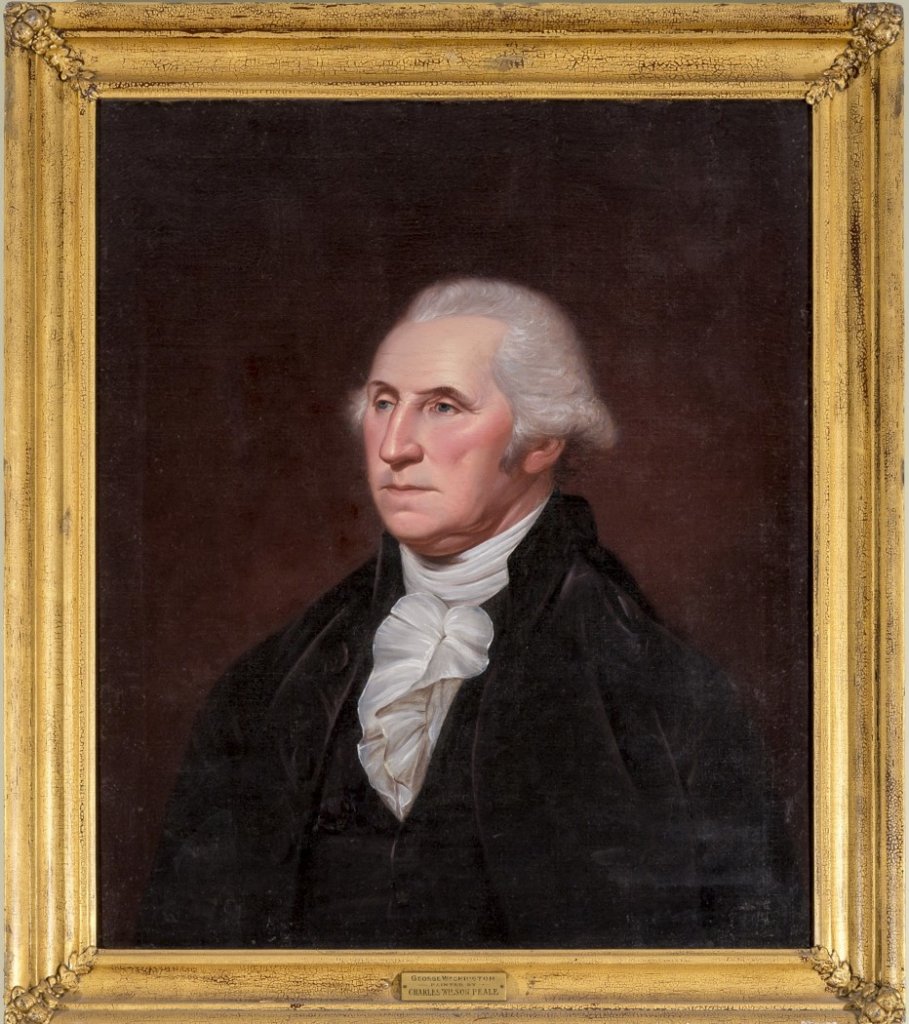
Charles Willson Peale (1741-1827)
American
Oil on Canvas
c.1795
For over 70 years George Washington’s portrait has been on public view at Macculloch Hall Historical Museum (MHHM) as its founder, W. Parsons Todd (1877-1976), intended. Todd purchased the Charles Willson Peale portrait of George Washington at auction in 1954 and brought it to his museum in Morristown, New Jersey, as the pride of his collection.
Visitors see Washington’s portrait and typically nod in recognition, indicating they know who the portrait is of. When these groups include children, either an adult initiates the conversation asking a child, “Do you know who that is?” or children eagerly share that they know who the portrait is of, without coaxing, saying, “That’s George Washington.” Typically, after another question or two, such as, “Is it a real Peale portrait?”, or “Did Washington visit this house when he was in Morristown?”, the conversation then moves on to other objects in the room. Presidents’ Day provides an opportunity to pause and share additional information about the story behind this portrait of our nation’s most famous patriot.
Looking at the portrait, the viewer sees an older white male dressed in fine civilian clothing, indicating his wealth and status. The artist, Charles Willson Peale (1741-1827), was an extremely talented portrait painter who leaned more on the side of realism than to perfection. In this portrait of Washington, the viewer can see a slight scar on his left cheek, a reminder of Washington’s bout with smallpox in 1751. Peale also preserves in this portrait, for viewers today, the face of George Washington which is both dignified and tired as he nears the completion of his second term as the first president of the United States. Looking at Washington’s eyes, consider all that Washington had personally experienced, what his eyes saw—the highs and lows of an eight-year war for independence with the mighty British empire followed by eight more years as the nation’s first president nurturing a fledgling nation, trying to keep what was won from being lost. Washington had only been home to his beloved Mount Vernon two times during the Revolutionary War with Britain. What the viewer does not see in this portrait of George Washington is equally important. This portrait does not resemble portraits of a monarch—no crowns, no scepters, or a military conqueror in full uniform with the spoils of war.
Another important point to remember is that Charles Willson Peale had painted multiple portraits of Washington, the earliest in 1772. Peale served as an officer in the Pennsylvania militia and participated in the battles of Trenton and Princeton, which enabled him to paint realistic portraits of Washington at the Princeton battlefield. Peale trained in London with American artist, Benjamin Rush, and during the course of his life painted the portraits of over 1000 military, political, and business leaders—the faces of the American Revolution.
Recently, additional research has uncovered more information about the original owners of the Washington portrait on exhibit at MHHM. The first owners were John Custis Wilson (1761-1830) and Margaret “Peggy” Wilson (1761-1825) who commissioned Peale to make a copy of the 1795 Washington portrait for their home, Westover Plantation in Somerset County, Maryland. This request by the Wilson family reflected what was occurring in other homes in the early Republic. Homes were decorated with images and symbols of the Revolutionary spirit including images of George Washington who was, “First in War, first in Peace, and first in the hearts of his countrymen.” But for this family, there were personal connections. Both John Custis Wilson and Peggy Wilson were distant cousins of Daniel Parke Custis (1711-1757), the first husband of Martha Washington and father of her children, John Parke Custis and Martha Parke Custis. The portrait of George Washington by Charles Willson Peale was an important family heirloom.
Earlier in 1791, the Wilsons had commissioned Peale to paint their portraits and a portrait of their young son. The portraits of John Custis Wilson and Margaret “Peggy” Wilson (also pictured here) are now in the collection of The Colonial Williamsburg Foundation. According to the documentation about these portraits on The Art Museums of Colonial Williamsburg website, Peale’s diary records that he had stayed with the wealthy Maryland family for approximately two weeks while he painted their portraits.
For over 225 years Americans have looked upon the face of George Washington in this portrait by Charles Willson Peale. This portrait at MHHM is one of three that Peale had reproduced based on the 1795 portrait painted in his studio in Philadelphia. Several facts are well known about the 1795 portrait: this image of Washington was the final portrait Peale painted of him. Washington sat for this portrait on three different occasions. At each sitting, Charles Willson Peale had in his studio other members of his family who were also painting portraits of Washington including Peale’s younger brother, James, and sons Rembrandt Peale, Raphaelle Peale, and Titian Peale. Charles Willson Peale’s portrait of Washington from 1795 is in the collection of The New-York Historical.
We are indebted to W. Parsons Todd for helping to not only preserve historical objects but to make these objects accessible to the public. W. Parsons Todd understood the value and purpose of history, particularly for future generations.
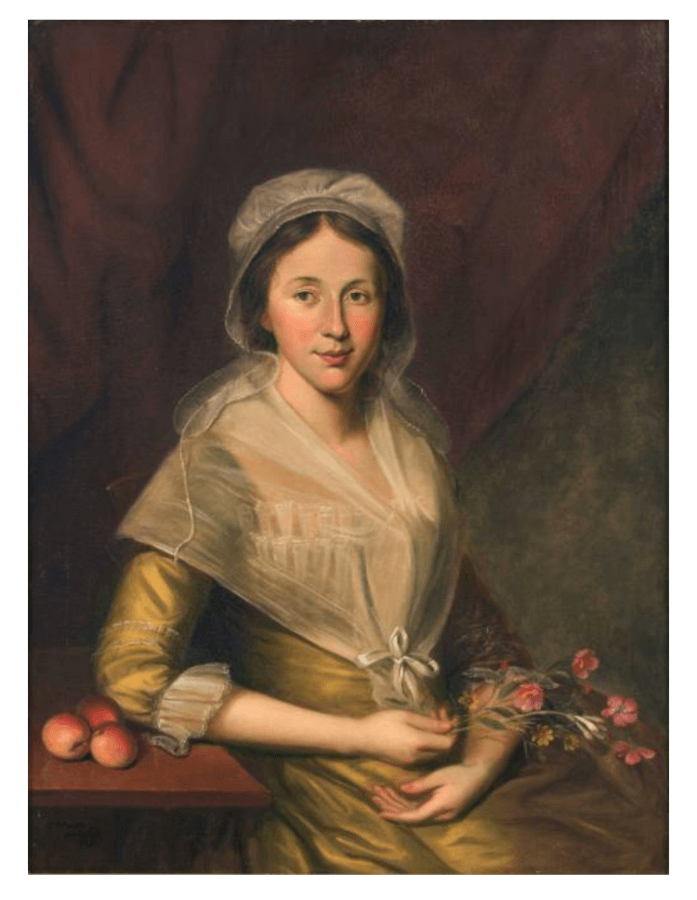
Charles Willson Peale (1741-1827)
Oil on Canvas
c. 1791
2014-46A&B
Collection of The Colonial Williamsburg Foundation.
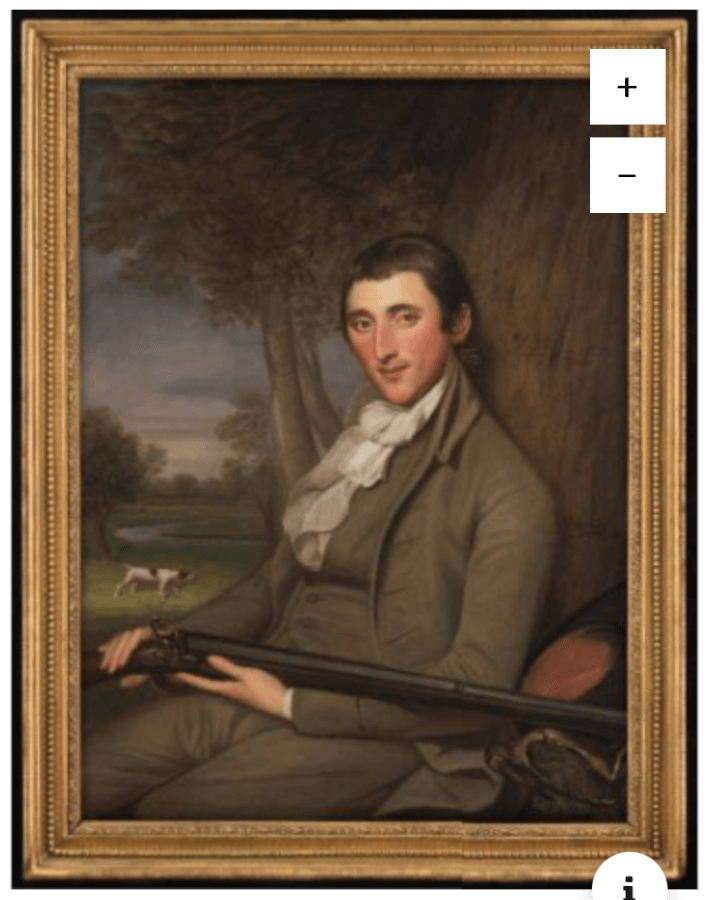
Charles Willson Peale (1741-1827)
Oil on Canvas
c. 1791
2013-103
Collection of The Colonial Williamsburg Foundation.